
ROVE R2-4K DUAL
Front and rear kit, Sony STARVIS 2 sensor, 3-inch display and built-in GPS.

This comparison uses the ROVE R2-4K DUAL front-and-rear package and the Garmin Dash Cam Mini 3, weighing recording coverage, incident evidence, physical fit, camera controls and storage.
Front and rear kit, Sony STARVIS 2 sensor, 3-inch display and built-in GPS.
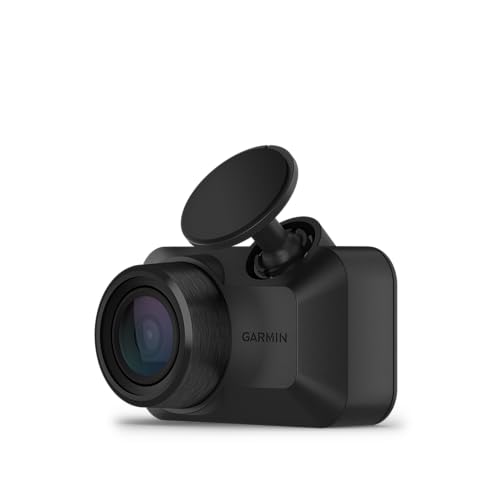
Ultra-compact, front-facing 1080p camera with integrated polarizer and voice commands.
As Amazon Associates, we earn from qualifying purchases. Links on this page may earn us a commission at no extra cost to you. Read more.
Important model distinction: The supplied ROVE product listing identifies the R2-4K DUAL, not the separate front-only R2-4K. Also, the DUAL's 3840 × 2160 output is upscaled from native 2.5K capture, not native 4K sensor detail. Both distinctions matter when comparing the devices.
Balanced driving coverage
The R2-4K DUAL records both directions and includes GPS speed and location records. Those capabilities carry more decision weight here than its screen or memory card alone. Garmin's key advantage is its significantly smaller front camera, with built-in windshield-glare reduction and hands-free voice commands.
ROVE score
72.7 / 100
Garmin score
56.3 / 100
Score difference
16.4 points
Recommendation confidence
High
Common verified coverage
100%
Ranking stability
100%
Ranking stability means ROVE stayed ahead in all 10 moderate weight-change scenarios. It is not a probability of real-world superiority. Scores reflect documented attributes and stated editorial utility rules, not comparative road-testing results.
Main reason to choose ROVE: included rear coverage and self-contained GPS evidence. Main reason to choose Garmin: a much smaller, simpler single-camera installation with a built-in polarizer.
| Decision area | ROVE R2-4K DUAL | Garmin Mini 3 | Edge |
|---|---|---|---|
| Recording coverage | Upscaled 2160p front, 1080p rear | 1080p front only, built-in polarizer | ROVE for two directions |
| Incident context | GPS speed and location, incident lock | Incident detection, no stand-alone GPS | ROVE |
| Physical fit | Larger screen-equipped unit and rear cable | Ultra-compact, no rear-camera cable | Garmin |
| Controls | 3-inch display, buttons and app | Voice commands and app, no display | Depends on use |
| Recording media | 128GB microSD included, up to 1TB listed | microSD needed separately, up to 512GB | ROVE for included storage |
An included rear camera adds a separate view of following traffic. That is a larger functional difference than the 10-degree gap between the products' front lenses. Garmin can participate in a multi-camera network, but a second camera is not included in this comparison.
ROVE logs GPS-related driving information on its own. Mini 3 does not provide stand-alone GPS video data, although Garmin documents options to sync information from a separate compatible GPS-enabled camera.
ROVE lists an included 128GB microSD card. Garmin requires an appropriately rated microSD card, which is not included. This is a setup convenience, not proof of better video quality.
Garmin's far smaller camera is easier to position discreetly. Its built-in polarizer helps address reflected windshield light, and voice commands can save a clip without using a screen.
Dash cams are bought to capture events. Camera direction, original sensor detail and glare control therefore matter more than an impressive output label alone.
| Specification | ROVE R2-4K DUAL | Garmin Mini 3 | Practical meaning |
|---|---|---|---|
| Front recording | 3840 × 2160 output at 30 fps; upscaled from native 2.5K | 1920 × 1080 at up to 30 fps | ROVE has the higher source-detail class, but advertised 4K output is not native 4K capture. |
| Rear camera in the package | Yes, 1080p at 30 fps | No | ROVE records events behind the vehicle without adding another camera. |
| Front field of view | 150° stated | 140° stated | ROVE covers a somewhat wider angle; these numbers do not prove more readable detail. |
| Glare reduction | Optional separate CPL accessory; not built in | Built-in Clarity polarizer | Garmin has the integrated glare-reduction feature. |
| Image processing and sensor | Sony STARVIS 2 IMX675; HDR support stated | Garmin Clarity HDR; sensor model not specified in reviewed official materials | Sensor branding and HDR claims alone cannot rank real footage quality. |
The included rear view gives ROVE its main recording advantage. Garmin's integrated polarizer is a useful counterweight, especially when reflections are a problem. Neither specification set establishes which camera will consistently read moving license plates at night.
Useful incident footage may need context beyond the visible image. Location records, automatic clip protection and parked recording are separate capabilities.
| Specification | ROVE R2-4K DUAL | Garmin Mini 3 | Practical meaning |
|---|---|---|---|
| Built-in GPS logging | Yes, route, speed and position | No built-in GPS data; compatible-camera sync possible | ROVE supplies this context without another GPS-enabled device. |
| Automatic incident clip protection | Built-in G-sensor and locked event footage | Incident detection and saved video | Both can protect clips triggered by detected incidents. |
| Parking-related recording | Impact-triggered parking mode | Parking Guard incident recording | Both offer parked-vehicle event capture with the proper power setup. |
| Parking power requirement | Compatible hardwire kit required, separately supplied | Always-on power or compatible parking/constant-power cable required | Neither should be assumed to provide parking recording from the normal switched outlet alone. |
| Remote connected features | ROVE phone app for nearby camera access | Optional Garmin Vault and network-linked functions; qualifying connection and subscription needed | Remote access conditions are not the same as local viewing. |
GPS is the decisive verified difference here. Both have event detection and conditional parking capability, so those shared features are not counted as separate wins for ROVE.
A smaller front camera can reduce the amount of equipment near the windshield. Installing a rear unit adds cable routing that a front-only setup does not need.
| Specification | ROVE R2-4K DUAL | Garmin Mini 3 | Practical meaning |
|---|---|---|---|
| Front camera body | About 3.64 × 2.50 × 1.45 in, based on product listing | About 2.05 × 1.24 × 0.80 in, based on Garmin's dimensions | Garmin is materially smaller. Mounting clearance still depends on vehicle design. |
| Camera display | 3-inch IPS | No built-in screen | ROVE allows a direct on-device view; Garmin avoids screen bulk. |
| Included camera installation | Front unit plus a wired rear camera | One compact front camera | Garmin needs less camera cabling for the package as supplied. |
| Mounting | Suction and adhesive mounts listed in box | Compact adhesive mount | ROVE supplies additional mounting choices; Garmin is less conspicuous. |
| Power connector | USB-C input | USB-C camera power | Connector type alone does not establish compatibility with every vehicle power setup. |
The difference is meaningful if windshield space is limited or a discreet installation is the priority. The ROVE size figure comes from its identified retail listing rather than a published manufacturer dimension drawing, so exact mounting clearance should be checked against the vehicle.
The key distinction is whether you prefer a visible on-camera interface or commands that work without a display.
| Specification | ROVE R2-4K DUAL | Garmin Mini 3 | Practical meaning |
|---|---|---|---|
| On-device viewing | 3-inch display with physical buttons | No camera display | ROVE can show footage and settings without depending on a phone for a screen. |
| Spoken commands | Voice guidance, but no documented hands-free command set | Voice commands for clip saving and audio controls | Garmin's voice feature can reduce the need to touch the camera. |
| Mobile app | ROVE app: view, download and configure footage | Garmin Drive app: view, export and configure footage | Both support local phone-based clip review. |
| Wireless file access | Dual-band Wi-Fi, up to 20 MB/s claimed transfer speed | Wi-Fi; no directly comparable transfer-speed figure verified | A one-sided manufacturer speed claim is not a measured head-to-head win. |
The screen helps with direct review, while voice command support helps with hands-free operation. Neither interface is universally preferable. Garmin's actual ease of use is not established by the feature list.
Card inclusion determines whether you can start recording with the contents of the box. Maximum supported capacity matters mainly when long periods of footage would otherwise be overwritten.
| Specification | ROVE R2-4K DUAL | Garmin Mini 3 | Practical meaning |
|---|---|---|---|
| microSD in the package | 128GB card listed as included | Not included | ROVE has a modest out-of-box setup advantage. |
| Published maximum capacity | Up to 1TB on ROVE's current product page | 512GB, Class 10 or better | Both support substantial looping storage. Extra headroom has diminishing value when current capacity is sufficient. |
| Local wireless transfer | Available through ROVE app | Available through Garmin Drive | Both allow nearby phone access, without proving equal download speeds. |
| Optional connected storage | No comparable first-party cloud service established in reviewed materials | Garmin Vault, with connection and subscription requirements | This is a conditional service option, not included local card storage. |
The included card drives most of this difference. The 1TB versus 512GB ceiling receives limited credit because capacity beyond ordinary needs is less valuable than having working media installed. Verify card compatibility with the exact unit and its firmware.
ROVE stayed ahead in all 10 specified sensitivity tests, each increasing or decreasing one major dimension weight by 20% relative to its baseline and then renormalizing. However, that test covers moderate priority changes, not every possible driver preference.
Compact-first example: giving physical fit 46% of the decision, recording 22%, incident evidence 10%, controls 15% and storage 7% changes the scores to ROVE 61.5 and Garmin 70.2. Under that distinctly different preference profile, Garmin is the stronger fit.
Move the sliders to change how much each documented decision area matters to you. The tool recalculates the scores from the same specification-based dimension ratings; it does not change the product facts or the published baseline result.
Adjusted result: ROVE leads.
The percentages are automatically normalized to 100%. Each dimension represents several related attributes, so related features are not scored as separate overall categories.
These are the baseline weights for a general dash cam decision. Each area has internally weighted criteria scored for practical usefulness, with reduced rewards for advantages beyond normal needs.
| Scoring factor | Weight |
|---|---|
| Recording coverage and capture | 36% |
| Incident context and parking | 22% |
| Physical fit and installation | 18% |
| Controls and review | 14% |
| Storage and local sharing | 10% |
| Total | 100% |
Both cameras have comparable documented evidence for all active scored criteria, so no missing-data normalization was needed. The score favors relevant verified capabilities, not the number of specification rows a camera wins. A bigger number receives limited extra credit once a feature is sufficient, and an included rear channel matters more than a small viewing-angle difference. The result is an editorial decision aid, not a test score or guarantee of footage quality or reliability.
Pixel dimensions, image sensors, HDR labels and polarizer features do not establish actual night footage quality, license-plate readability in motion or consistent exposure under different windshields. Specifications also do not prove app reliability, long-term durability or how easy each installation feels in your particular vehicle. This comparison does not replace identical-condition footage tests.