
New Balance 574 Core
Suede and mesh upper, ENCAP midsole, D, 2E and 4E widths
Slight overall edge74.8/100SpecFit Score
Check Price on Amazon
The New Balance 574 Core and the ASICS GEL-1130 are both retro runners made for everyday wear. We compare their width options, cushioning, durability and stability so you can find the pair that suits your feet.
Suede and mesh upper, ENCAP midsole, D, 2E and 4E widths
Slight overall edge74.8/100SpecFit Score
Check Price on Amazon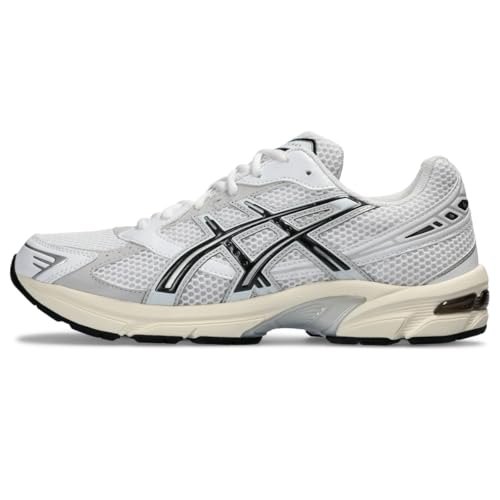
Mesh upper with overlays, rearfoot GEL, TRUSSTIC support, standard width
Best for standard-width feet73.4/100SpecFit Score
Check Price on AmazonAs Amazon Associates, we earn from qualifying purchases. Links on this page may earn us a commission at no extra cost to you. Read more.
Bottom line: The NB 574 takes a slight overall edge, 74.8 to 73.4, and almost all of that lead comes from its wide and extra-wide sizes. If a standard width fits you, the ASICS GEL-1130 is the stronger pick, with softer, more shock-absorbing cushioning, a wider heel base and a lighter build.
Verdict: different winners for different feet. The NB 574 wins narrowly overall; the GEL-1130 wins for standard-width feet.
It comes in Standard (D), Wide (2E) and X-Wide (4E), and its outsole carries nearly twice as much rubber as the GEL-1130's.
In lab testing it absorbed far more heel impact (114 vs 92 SA) on a much softer midsole, and it sits on a wider, steadier heel.
On this page
| Decision area | NB 574 | GEL-1130 | Edge |
|---|---|---|---|
| Fit and width options | D, 2E and 4E; roomy toes, snug midfoot | Standard width only; roomier midfoot | NB 574 |
| Cushioning and ride | Firm foam, 13 mm drop | Softer foam with GEL, 10 mm drop | GEL-1130 |
| Durability | 8.2 mm outsole rubber | 4.7 mm outsole rubber | NB 574 |
| Stability | 80.2 mm heel base | 90.1 mm heel base | GEL-1130 |
| Everyday wear | 393 g, same grip | 366 g, same grip | GEL-1130 (small) |
| Breathability (not scored) | 3 of 5 | 2 of 5 (leather version) | Depends on version |
Swipe sideways to see more
The two shoes trade wins almost evenly. The 574's lead rests on one big advantage plus a solid durability gap, while the GEL-1130 claws most of it back with comfort and stability.
Take the width options out of the picture, which is fair if a standard D width fits you, and the GEL-1130 moves well ahead: 77.7 to 70.3.
Fit comes first because no amount of cushioning helps a shoe that pinches.
| Specification | NB 574 | GEL-1130 | Practical meaning |
|---|---|---|---|
| Width options | Standard (D), Wide (2E), X-Wide (4E) | Standard only; no wide version listed | Wider feet have a real choice with the 574. |
| Men's size range | US 4 to 18 | Not verified | Very large feet should check the 574 first. |
| Interior width, widest part (lab) | 88.7 mm | 94.5 mm | GEL-1130 has more room across the ball of the foot. |
| Toebox width at big toe (lab) | 74.1 mm | 69.1 mm | 574 gives toes more side-to-side wiggle room. |
| Toebox height (lab) | 25.4 mm | 24.4 mm | Both sit low over the toes; nearly identical. |
| Sizing guidance | Brand says it runs small | No brand guidance | Consider a half size up in the 574. |
Swipe sideways to see more
The two shoes are shaped differently inside. The 574 is snug across the ball of the foot but opens into an unusually wide, rounded toebox, while the GEL-1130 is roomier through the midfoot and more average at the toes. In a standard width, the GEL-1130 is the more forgiving fit. The 574's trump card is that you can simply buy it wider.
Edge: NB 574 (substantial, mainly for wider feet)
Both started life as running shoes, but today you'll mostly wear them walking and standing, where impact protection and a forgiving midsole matter most.
| Specification | NB 574 | GEL-1130 | Practical meaning |
|---|---|---|---|
| Heel shock absorption (lab) | 92 SA | 114 SA | GEL-1130 softens heel landings noticeably more. |
| Midsole firmness (lab, lower is softer) | 62.3 AC main foam, 39.8 AC top layer | 43.9 AC | 574 feels firm; GEL-1130 feels softer underfoot. |
| Heel-to-toe drop (lab) | 13.0 mm | 10.0 mm | 574 lifts the heel more than a typical sneaker. |
| Heel / forefoot stack (lab) | 38.2 / 25.2 mm | 32.3 / 22.3 mm | 574 sits taller, but taller isn't softer. |
| Bending stiffness (lab) | 15.6 N | 14.3 N | Both moderately stiff; GEL-1130 bends a bit easier. |
| Cushioning technology | ENCAP: foam core with polyurethane rim | Rearfoot GEL insert in foam midsole | Different approaches; lab results matter more. |
Swipe sideways to see more
This is where the GEL-1130 pulls clearly ahead. Its shock absorption reading is among the higher ones for lifestyle sneakers, and its midsole measured much softer than the 574's firm main foam. The 574 does have a softer top layer of foam, which takes the edge off, but the overall feel is firmer and more planted.
The 574's tall stack is easy to mistake for plush cushioning. It mostly adds height, and with a 13 mm drop, you'll feel your heel sitting noticeably higher than your toes.
Edge: GEL-1130 (substantial)
Everyday sneakers live or die by their outsoles, so this carries real weight.
| Specification | NB 574 | GEL-1130 | Practical meaning |
|---|---|---|---|
| Outsole rubber thickness (lab) | 8.2 mm | 4.7 mm | More rubber to wear down before you hit foam. |
| Outsole wear after abrasion test (lab) | 0.5 mm | 0.9 mm | Lower is tougher; 574 resisted wear better. |
| Toebox durability (lab, 1 to 5) | 4 | 4 | Both uppers held up well at the toe. |
| Heel padding durability (lab, 1 to 5) | 4 | 4 | Both linings resist wearing through at the heel. |
| Upper materials (brand) | Suede and mesh; contains cow leather | Mesh with suede or synthetic leather overlays | Overlays vary by colorway; check the listing. |
Swipe sideways to see more
The uppers are evenly matched, so the outsole decides it. The 574 carries one of the thickest rubber outsoles you'll find on a casual sneaker and barely marked in the abrasion test. The GEL-1130 performed around average, which is perfectly fine, but if you walk a lot on rough pavement, the 574 has more life in reserve.
Edge: NB 574 (meaningful)
A wider, stiffer base helps keep your foot steady, especially on uneven ground or late in a long day.
| Specification | NB 574 | GEL-1130 | Practical meaning |
|---|---|---|---|
| Midsole width at heel (lab) | 80.2 mm | 90.1 mm | GEL-1130 lands on a broader, steadier base. |
| Midsole width at forefoot (lab) | 114.3 mm | 111.8 mm | Both wide up front; difference is small. |
| Torsional rigidity (lab, 1 to 5) | 4 | 4 | Both resist twisting well. |
| Heel counter stiffness (lab, 1 to 5) | 3 | 3 | Both hold the heel without feeling rigid. |
| Support system (brand) | ENCAP polyurethane rim | TRUSSTIC midfoot support | Both add structure; not separately scored. |
Swipe sideways to see more
The GEL-1130 began life as a stability running shoe, and it shows in its heel, which is almost 10 mm wider than the 574's. Everything else is close to even. Both shoes are solidly built, so this is a meaningful but not dramatic win.
Edge: GEL-1130 (meaningful)
These details shape how the shoes feel over a full day, even if they rarely decide the purchase alone.
| Specification | NB 574 | GEL-1130 | Practical meaning |
|---|---|---|---|
| Weight per shoe (lab) | 393 g (13.9 oz) | 366 g (12.9 oz) | GEL-1130 is 27 g lighter; you may barely notice. |
| Wet heel grip (lab friction) | 0.55 | 0.55 | Identical, and both above the sneaker average. |
| Removable insole | Yes | Yes | Both can take your own orthotics. |
| Breathability (lab, 1 to 5, not scored) | 3 | 2 (leather version tested) | Neither is a summer shoe; mesh versions may vary. |
Swipe sideways to see more
The GEL-1130 is a little lighter, and grip is a dead heat. We left breathability out of the score because the lab tested a leather GEL-1130 against a suede and mesh 574, which isn't a fair match. One thing to know: New Balance's own listed weight for the 574 Core varies between pages, so we used the independent lab figures for both shoes.
Edge: GEL-1130 (small)
The NB 574 stayed ahead in all ten of our tested scenarios, where each scoring factor's weight moved up or down by 20 percent. That sounds rock solid, but the margin is thin.
Move the sliders to match what matters to you. This only changes how much each area counts; the measured specs stay the same.
With these priorities: NB 574 leads by 1.4 points.
The NB 574 is the safer pick. New Balance sells it in Wide (2E) and X-Wide (4E) as well as Standard (D), while ASICS doesn't list a wide version of the GEL-1130. The GEL-1130 is a little roomier than average across the ball of the foot, which may be enough for slightly broad feet. See fit and sizing.
The GEL-1130, based on lab tests. It absorbed more heel impact (114 vs 92 SA) and its midsole measured much softer. The 574 has a taller stack, but its main foam is firm, so it feels more solid than plush. Comfort is still personal, so try both if you can.
Yes, slightly. In independent lab weighing, the GEL-1130 came in at 366 g (12.9 oz) per shoe against 393 g (13.9 oz) for the 574. That's a 27 g difference, which most people won't notice over a normal day of walking.
New Balance says the 574 Core runs small and suggests considering ordering up from your normal size. Many owners still report a true-to-size fit, so sizing feedback is mixed. If you're between sizes, going a half size up in the 574 is the cautious choice.
The specs favour the NB 574's outsole. It has 8.2 mm of rubber versus 4.7 mm and showed less wear in an abrasion test. The uppers scored the same in lab durability tests. Real lifespan still depends on how and where you walk. See durability.
| Scoring factor | Weight |
|---|---|
| Fit and width options | 25% |
| Cushioning and ride | 25% |
| Durability | 20% |
| Stability | 15% |
| Everyday wear | 15% |
| Total | 100% |
For two everyday retro sneakers, fit and cushioning share the top weight because a shoe that doesn't fit or tires your feet fails at its main job. Width options carry a lot of the fit score since, for some people, they decide whether the NB 574 or the GEL-1130 can be worn at all. We judged practical usefulness rather than counting rows won, and gave smaller credit where extra numbers stop mattering much. The GEL-1130's size range couldn't be verified, so it was left out rather than scored as zero, which puts data coverage at 95 percent. The SpecFit Score is a decision aid, not a guarantee of comfort, durability or fit on your feet. Read more here.
Lab measurements and size charts can't promise how either shoe will feel on your particular feet, since arch shape, gait and sock choice all change the experience. Colorways also differ: some GEL-1130 versions use suede overlays and others synthetic or real leather, which affects airflow and how the upper wears. The lab tested one pair of each, so treat close numbers as roughly equal and try both on if you can.